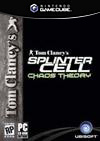
Tom Clancy's Splinter Cell Chaos Theory
- Developer
- Ubisoft
- Publisher
- Ubisoft
- Genre
- Action
- Players
- 1
- Rated
- Teen
- Released
- TBA
 Solid Snake Who? The name around here is Sam Fisher - UbiSoft’s badass NSA spy agent who could break your neck and kill your family all while they were taking their morning shower - and he’s back and more lethal than ever in Tom Clancy’s Splinter Cell Chaos Theory. What impressed me the most about Sam’s first two adventures was players were placed in a large military espionage sandbox, given a variety of death tools and relative freedom over how they took out the garbage and conquered the intriguing narrative driven missions. This let players explore their own morality without ever wasting real body bags, though the occasionally linear level structure plagued gamers with trial and error frustration.
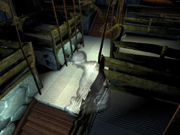 Chaos Theory is aiming to do away with the linear design and innovate as well as expand on the morality concept by providing a more open-minded game design that is less restricting and offers an abundance of freedom. Sam now has secondary, primary, and tertiary goals to complete. Your primary goals must be completed, while tertiary goals may change in accordance to the mission, and secondary goals are completely optional but occasionally become primary objectives later This hierarchy level structure offers player more freedom and engaging opportunities and is a great step up from Pandora Tomorrow. In addition to more objective based choices there will now be a multitude of different paths to take through each level. The alternate routes can be seen as different means to the same end; certain paths may pose environmental obstacles while others may be laden with explosives or patrolling guards, but you’re going to finish in the same place regardless where you go.
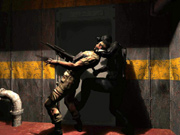
The addition of a hunter’s knife gives Sam an extra edge when taking sleepy guards hostage, and Sam is more violent in general. He will break necks, drop enemies back onto his knife, knife their heart out, and even give them a swift kick in the nuts. For disposing of hostages quickly he can simply K.O. them with an elbow to the head, making a fast getaway all the more accessible.
Chaos Theory on the X-Box is practically the sexiest thing I have ever seen a video game do. And the graphics should translate well to the Cube, especially the water effects which can be seen everywhere throughout Chaos. It should also be mentioned that Sam's body moves about the game world more fluidly and his animation are more believable, put simply: he fits in better. His coming of age can be fealt in his careful stalk and he will even enter the Closer Than Ever stance when he’s near a potential threat. I like to call it You’ll soon be dead stalk as Sam will eye down his enemy, walk softer, with hand over knife ready for any choices the player will make. Coupled with the more subtle touches such as blowing out candles and punching through paper walls (Oriental architecture) creates a convincingly realistic atmosphere where players are free to do just about anything they can think of.
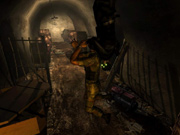 The idea of being able to do anything you can think of is multiplied when you throw in the idea of fully function multiplayer Co-Op campaign that ties in to but is still separate than the single player experience. GameCube gamers missed out on the intelligent team-work based multiplayer with Pandora and will bite the dust with Chaos, but thankfully the Co-Op is available as an off-line game. As two separate agents of the Third Echelon division, you and a friend will tackle completely original levels making use of new weapons and gadgets and the environment. But the core of the Co-Op campaign lies in the interesting possibilities of having another spy hanging around; players can hoist the other onto a buildings edge then climb up their back onto the roof, they can scale buildings via a rope that one would climb as the other pulls, as well as having a friend slowly reel you down from ventilation shafts via a wire. Those are just a handful of ideas I saw executed in no more than five minutes of gameplay. I can only begin to imagine the possibilities to be found in a fully engaging story driven campaign. If only the Clancy licence allowed such acts of foolishness such as changing into an enemies get-up (Ala the Hitman series) – where one player could falsely hold the other hostage then barge into a room demanding the enemies surrender only to find themselves weaponless and being shot at by the very hostage they apparently saved.
I’m sure UbiSoft can think of better ways to make use of the team work in Co-Op though. There’s still a lot to be told about Chaos Theory and I’ve left out some minor gameplay additions so that our next update isn’t completely empty. With the games expectancy falling in mid 2005 gamers will need to wait patiently for more tantalizing details as they emerge. Look for an update in the coming weeks.